Franchise

All Courses

Type a course name or short form (acronym) to find any course quickly.
DSE

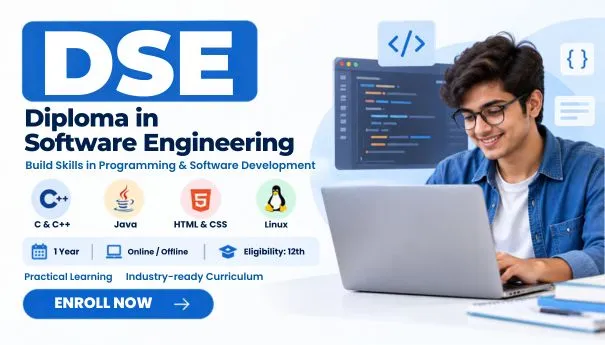
Diploma In Software Engineering (DSE)

Start Date 1 October 2026
Duration 1 Year
Mode Online / Offline
Certification CITC Certified
Batch / Course DSE
Enroll Now Download Syllabus

Click here for CITC All Courses FEES

Course Highlights

What you get when you enrol with CITC

Industry-ready Curriculum
Practical Learning
CITC Certificate
Flexible Batches
Placement Support
Career Guidance
1,744+ Franchises
41,756+ Students
445+ Courses
10,439+ Govt. Placements
22,966+ Private Placements
Diploma In Software Engineering

DSE - Diploma in Software Engineering

Do Software Engineering Course with CITC – An ISO 9001:2015 certified organization, associated with Microsoft, ICDL for International Computer courses, NIELIT, MSME & Google. 

About Course

Diploma in Software Engineering is a diploma level course. This course is about learning the skills needed to develop a software that is user-friendly, affordable, reliable and easy to maintain. The principal of  designing, testing and maintenance is also included in this program

What you will Learn

Students will develop problem solving and communication abilities throughout the program.

Scope

One can apply as an Analyst Programmer,  gaming developer, mobile app developer,  software developer, programmer,  technical customer care specialist,  teacher/ lecturer, etc.

Course Papers / Subjects

What you will study in this programme

01
Fundamentals
02
MS Word-Required in Lots of office work
03
MS Excel-For Data Entry-listing-Accounting
04
Power Point-Basically used for Presentations
05
MS-Access-For Creating Office Databases
06
Internet-For browsing mails & websites
07
Digital Services-Net Banking, Cyber Awareness
08
Programming flow and structures.
09
Language C-C Programming
10
Language HTML
11
CSS
12
Linux and commands
13
Language C++-C Programming
14
Introduction to Java-For Software development
15
Java Concepts

Syllabus (Module-wise)

Expand each topic for details

Module 1

Course Modules/Papers

  • Fundamentals, MS Office, Internet(Digital Services)
  • Data Flow Structure, Language  C, HTML, CSS

  • Introduction to computers
  • Input output devices, Memory
  • Hardware Software
  • Number System
  • Introduction to Windows
  • Changing Windows Properties( window color, screen saver,, resolution, date and time)
  • Working with Notepad and Paint
  • Creating, Deleting, Renaming Files and Folders

  • Home
  • Insert
  • Page Layout
  • References
  • Review
  • View
  • Mailing

  • Home
  • Insert
  • Page Layout
  • Formulas
  • Data
  • Review
  • View

  • Home
  • Insert
  • Design
  • Animation
  • Slidshow
  • Review
  • View

  • Home
  • Create
  • External Data
  • Database Tools
  • Datasheet

  • Introduction to Internet
  • Surfing
  • Email
  • Create Account
  • Sending & Receiving E-Mails
  • Web Browsers
  • Downloading & Uploading
  • Google Drive
  • Search Engines

  • Net Banking
  • Debit/Credit Card Transactions
  • E-wallet
  • UPI
  • Fraud Emails
  • Spams

  • Algorithms
  • Flowchart

  • C Overview
  • Environment Setup
  • Basic Syntax
  • Data Types
  • Variables
  • Constants
  • Storage Classes
  • Operators
  • Loops
  • Functions
  • Arrays
  • Pointers
  • Strings
  • Error Handling

  • HTML Elements
  • Attributes
  • Headings
  • Paragraphs
  • Styles
  • Comments
  • Colors
  • Images
  • Tables
  • Lists
  • Classes
  • File Paths
  • Forms
  • Input Types

  • CSS Introduction
  • Syntax
  • Colors
  • Fonts
  • Styles
  • Backgrounds
  • Colors
  • Images
  • Tables
  • Lists
  • Positions
  • Overflow
  • Floats
  • Inline Blocks
  • Forms
  • Rounded Corners
  • Gradients
  • Shadows
  • Buttons
  • Variables
Module 2

Course Modules/Papers

  • Linux and Commands
  • Language C++, Java

  • History
  • Difference between Linux and Windows
  • Difference between  Linux and Unix
  • GNU
  • Usage
  • Career Options
  • Root
  • Basic Commands
  • Vi Editor
  • Understanding Files and Directories in Linux 

  • C++ Characteristics
  • Polymorphism
  • Abstract Data Types
  • I/O Services
  • Functions and Variables
  • Arrays and Strings in C++
  • Classes in C++
  • Using Constructors
  • Using Destructors
  • Operator Overloading
  • Assigning Values
  • Storage Management
  • Inheritance
  • Templates

  • Java Vs C++
  • Constants
  • Variables
  • Data types
  • Operators
  • Control Structure
  • Syntax

  • Introduction
  • Classes
  • Objects
  • Encapsulation
  • Abstraction
  • Inheritance
  • Packages
  • Interfaces/li>
  • Exception Handling
  • Multi-Threading
  • File handling
  • Applets

What You Will Learn & Career Scope

Details from the course content


Frequently Asked Questions

Common questions about this course

DSE stands for Diploma in Software Engineering. CITC’s DSE Course provides practical training in software development, programming, web technologies, and computer applications.

CITC’s Diploma in Software Engineering is a 1-year course designed to provide structured learning in software engineering.

Candidates who have completed 12th standard are eligible to join CITC’s DSE Course.

The DSE syllabus includes MS Office, Internet, C, C++, Java, HTML, CSS, Linux, and Data Flow Structure.

Yes, CITC’s DSE Course includes C programming, covering programming fundamentals and related concepts.

Yes, the CITC DSE syllabus includes both C++ and Java to develop programming and software development skills.

Yes, CITC’s DSE Course includes HTML and CSS, helping learners understand the fundamentals of web development.

Yes, Linux and commands are included in the CITC DSE Course syllabus as part of the software engineering curriculum.

Yes, CITC offers the Diploma in Software Engineering in both online and offline modes.

Yes, CITC provides a CITC-certified certificate after successful completion of the Diploma in Software Engineering course.

Real Stories. Real CITC.

Stories That Inspire Trust

Training at 25 PB Battalion
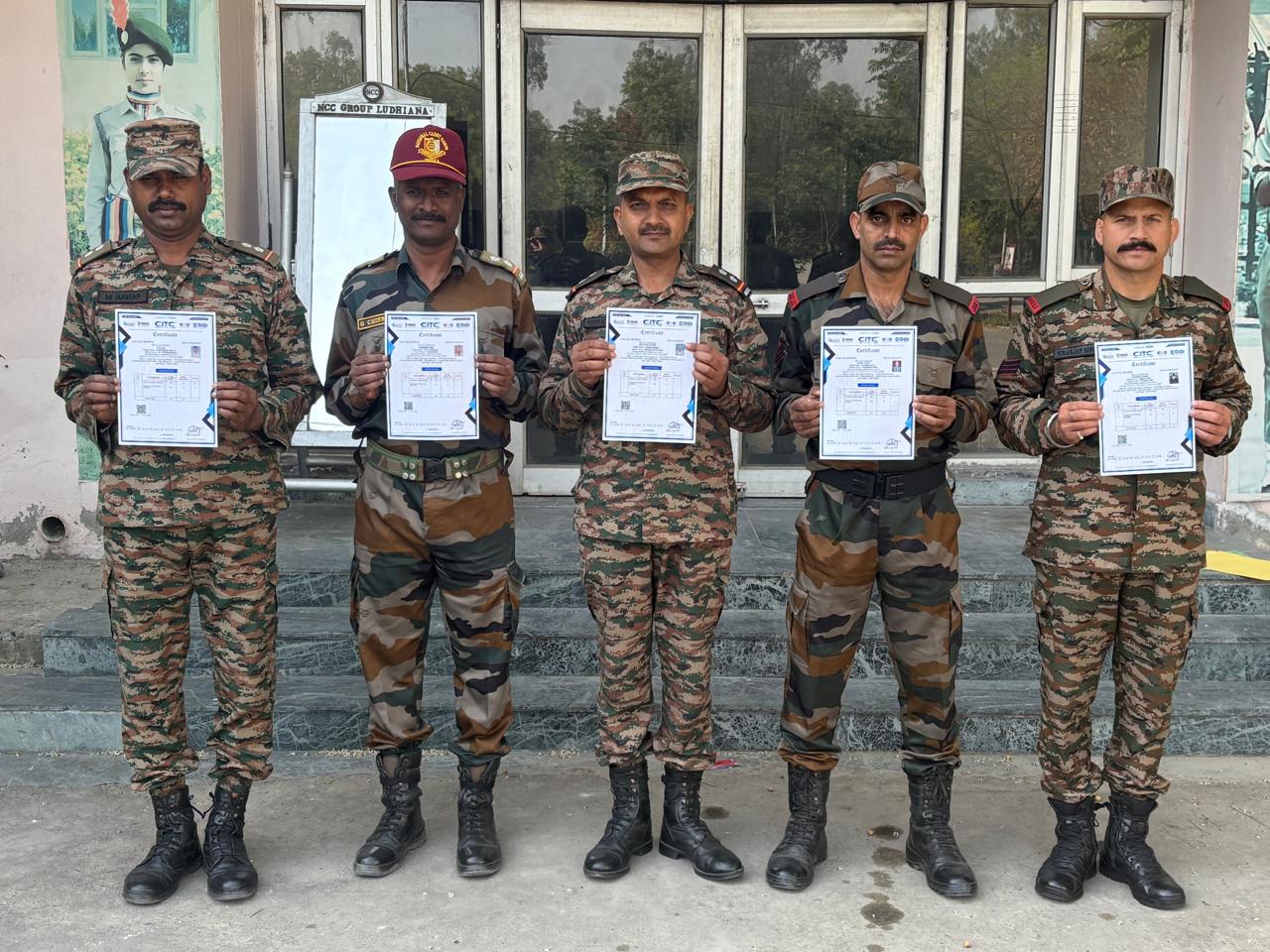
Training at 25 PB Battalion

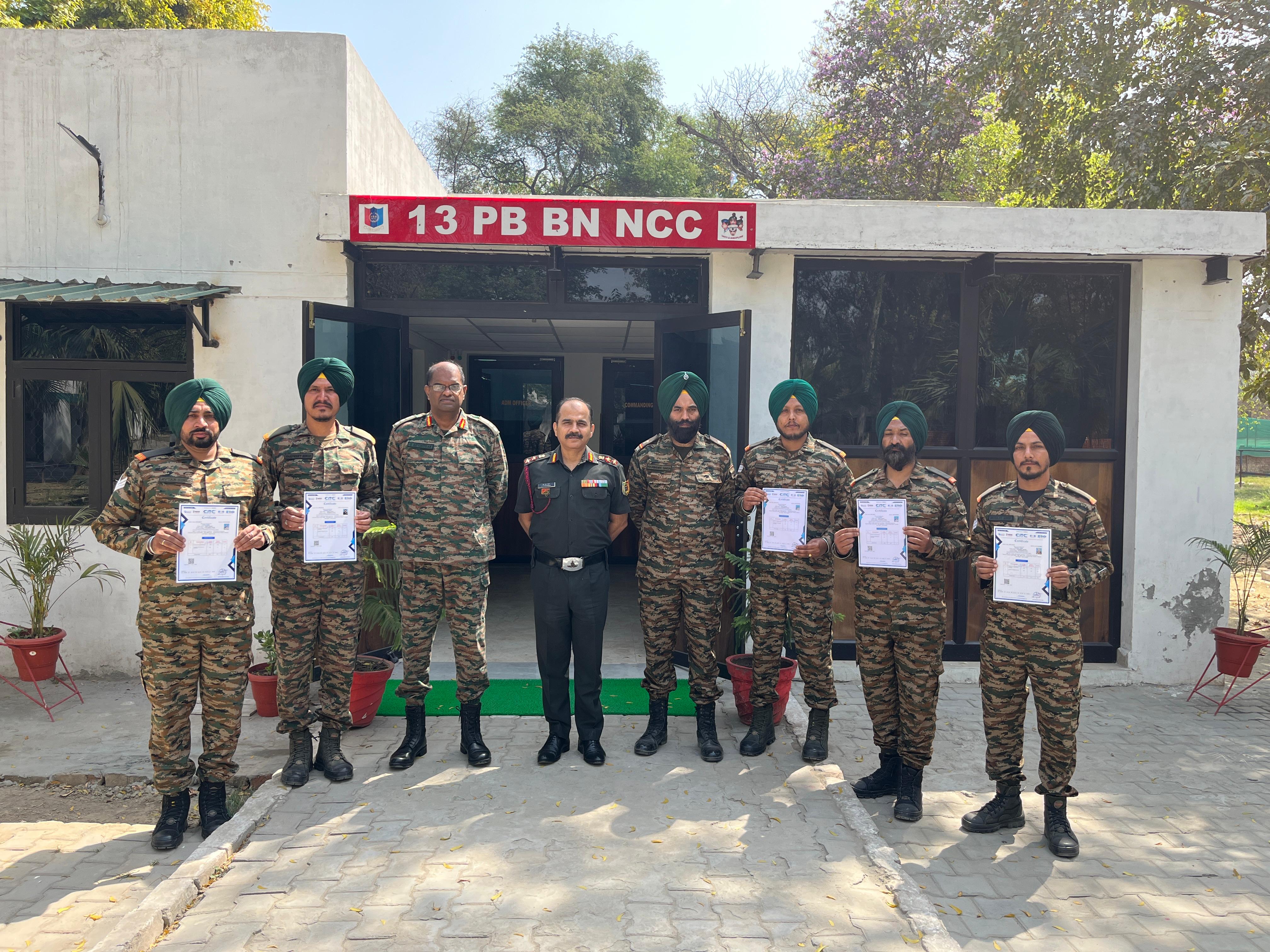
Training at 13 PB Battalion

Training at 13 PB Battalion