Franchise

All Courses

Type a course name or short form (acronym) to find any course quickly.

Career-Ready · Industry-Focused

Certificate in Data Science (CDS)

Data Science Course – Python, Big Data & VisualizationIntroductionThis data science course is designed to help you build a strong foundation in both theory and real-world application. Whether you're studying onlin…

Duration 3 Months Mode Online / Offline Eligibility 12th CITC Certified Placement Support

Data Science Course Python Machine Learning (CDS)

Start Date 1 October 2026
Duration 3 Months
Mode Online / Offline
Certification CITC Certified
Batch / Course CDS
Enroll Now

Click here for CITC All Courses FEES

Course Highlights

What you get when you enrol with CITC

Industry-ready Curriculum
Practical Learning
CITC Certificate
Flexible Batches
Placement Support
Career Guidance
1,744+ Franchises
41,756+ Students
445+ Courses
10,439+ Govt. Placements
22,966+ Private Placements
Data Science Course Python Machine Learning

Data Science Course – Python, Big Data & Visualization


Introduction

This data science course is designed to help you build a strong foundation in both theory and real-world application. Whether you're studying online or offline, you'll explore how data science and machine learning work together to drive decisions in industries like healthcare, finance, e-commerce, and beyond. The course introduces tools and technologies such as Python compilers, SQL, data visualization tools, and Big Data tools that every aspiring data scientist should know.

If you’ve ever asked, “What is data science?” or wondered how Python is used in data science, you’re in the right place. Our goal is to make concepts like statistics for data science, types of machine learning, and data science projects simple, practical, and career-focused.

Course Papers / Subjects

What you will study in this programme

01
Introduction to Data Science
02
The Data Science Workflow
03
Understanding Data Types and Data Structures
04
Data Collection Techniques
05
Data Cleaning Techniques
06
Exploratory Data Analysis (EDA)
07
Feature Engineering
08
Model Selection and Evaluation
09
Model Deployment and Monitoring
10
Machine Learning Concepts and Techniques
11
Capstone Project & Portfolio Building

Syllabus (Module-wise)

Expand each topic for details

Module 1

Course Papers

  • Data Science Fundamentals

  • What is Data Science
  • The Evolution of Data Science
  • Importance of Data Science in Today’s World
  • Applications Across Industries
  • Key Skills Required for a Data Scientist
  • Future Trends and Opportunities in Data Science

  • Overview of the Data Science Lifecycle
  • Data Collection & Data Sources
  • Data Cleaning & Preparation
  • Exploratory Data Analysis (EDA)
  • Building Predictive Models
  • Model Evaluation & Optimization
  • Deployment Basics

  • Numerical, Categorical, Text, and Time Series Data
  • Arrays, Lists, Dictionaries, and DataFrames
  • Structured vs Unstructured Data
  • Choosing the Right Data Structure for Analysis

  • Manual and Automated Data Collection
  • Primary vs Secondary Data
  • Real-Time Data Streams
  • Ethical and Legal Considerations in Data Sourcing

  • Importance of Clean Data
  • Identifying and Handling Missing Values
  • Dealing with Outliers and Duplicates
  • Data Transformation & Normalization
  • Tools Used for Data Cleaning (Excel, Python - Pandas, etc.)
  • Best Practices for Preprocessing
Module 2

Course Papers

  • Machine Learning Basics

  • Why EDA Matters
  • Visualization Techniques (Histograms, Scatter Plots, Boxplots)
  • Summary Statistics and Insights
  • Feature Correlation and Distribution Analysis

  • What are Features in ML
  • Creating New Features
  • Handling Categorical Data (Encoding Techniques)
  • Scaling & Normalization
  • Feature Selection Techniques

  • Understanding Different Types of Models
  • Supervised vs Unsupervised Learning Basics
  • Model Selection Criteria (Accuracy, Precision, Recall)
  • Cross-Validation Techniques
  • Overfitting and Underfitting

  • Introduction to Model Deployment
  • Local vs Cloud Deployment
  • Introduction to APIs for Model Deployment
  • Monitoring Model Performance Over Time
  • Updating Models with New Data

  • What is Machine Learning?
  • ML vs Traditional Programming
  • Overview of ML Algorithms (Linear Regression, KNN, Decision Trees)
  • Steps in Building an ML Model
  • Challenges in Model Training

  • Guided Real-World Project (e.g., House Price Prediction)
  • End-to-End Project Workflow
  • Model Building and Evaluation
  • Report Generation and Insights
  • Introduction to Building a Portfolio (GitHub, Resume Integration)

What You Will Learn & Career Scope

Details from the course content

Why Choose This Course?

This data science course with certification is tailored to make you job-ready by focusing on core concepts, practical tools, and real-world applications. Our training combines theoretical clarity with hands-on learning through Data Science Projects, ensuring you're not just learning but building. The inclusion of trending tools and platforms like Python, SQL, and visualization libraries makes this the best data science course to future-proof your career.

Whether you aim to understand the difference between AI and data science, or explore how machine learning vs deep learning in data science applies to real problems, this course prepares you with everything you need.

What Will You Learn?

  • Understand what does a data scientist do in various industries
  • Use data visualization techniques to derive insights
  • Perform analysis in Big Data environments using practical tools
  • Apply statistics for data science to interpret datasets
  • Build and deploy basic machine learning models
  • Answer common SQL interview questions and write optimized SQL query interview questions
  • Develop projects that demonstrate your understanding of Data Science with Python
  • Use leading Big Data tools for scalable data handling


Opportunities After This Course

Completing this course opens doors to various job roles such as:

  • Junior Data Scientist
  • Data Analyst
  • Machine Learning Intern
  • Business Intelligence Developer
  • Big Data Analyst

With the included data science certification and project portfolio, you’ll stand out to employers looking for practical experience and knowledge of tools used in data science. You’ll also be prepared to move into specialized fields like Deep Learning Course or Data Mining, or continue into a full-fledged data science course with placement support.

Who Can Enroll?

  • Beginners looking to enter the tech industry
  • Students and graduates in any stream
  • Working professionals looking to upskill
  • Entrepreneurs wanting to make data-driven decisions
  • Anyone curious about how to start learning data science

No prior coding experience is needed—our course starts from the ground up.

Enroll Now

Get started today with our data science course online or offline and take your first step toward a future-proof, high-demand career. Gain hands-on experience, learn from experts, and walk away with a certification and a portfolio to impress recruiters.

👉 Limited seats available! Join our data science course with certification and unlock the door to opportunities in AI, analytics, and more.

Frequently Asked Questions

Common questions about this course

Certification in Data Science is a course that introduces learners to data analysis, statistics, programming, and data-driven problem-solving. It helps learners understand how data can be collected, processed, analyzed, and interpreted.

The course may cover data analysis, statistics, Python programming, data visualization, databases, and machine learning fundamentals. Practical exercises help learners apply these concepts to real-world datasets.

The course can be suitable for students, graduates, IT professionals, and beginners interested in data-related careers. Basic computer knowledge and an interest in mathematics or programming can be helpful.

Yes, beginners can start learning Data Science through a structured course that covers fundamental concepts first. Regular practice with programming, statistics, and datasets can improve understanding.

Data Science helps learners develop analytical, programming, visualization, and problem-solving skills.
These skills can be useful across technology, business, finance, marketing, and other data-driven fields.

Python is one of the most commonly used programming languages in Data Science. It provides libraries and tools for data analysis, visualization, machine learning, and scientific computing.

Practical learning can include working with datasets, performing data analysis, creating visualizations, and building basic models. Hands-on projects help learners understand how Data Science techniques are applied.

Learners can prepare for roles such as Data Analyst, Junior Data Scientist, Business Analyst, or related data-focused positions. Career opportunities depend on skills, projects, experience, and additional qualifications.

Basic knowledge of mathematics and statistics can be helpful for understanding many Data Science concepts. A structured course can gradually introduce the mathematical and statistical concepts required.

After certification, learners can explore Machine Learning, Artificial Intelligence, Deep Learning, Big Data, or advanced analytics. Further learning can be selected according to individual career goals and interests.

Real Stories. Real CITC.

Stories That Inspire Trust

Training at 25 PB Battalion

Training at 25 PB Battalion

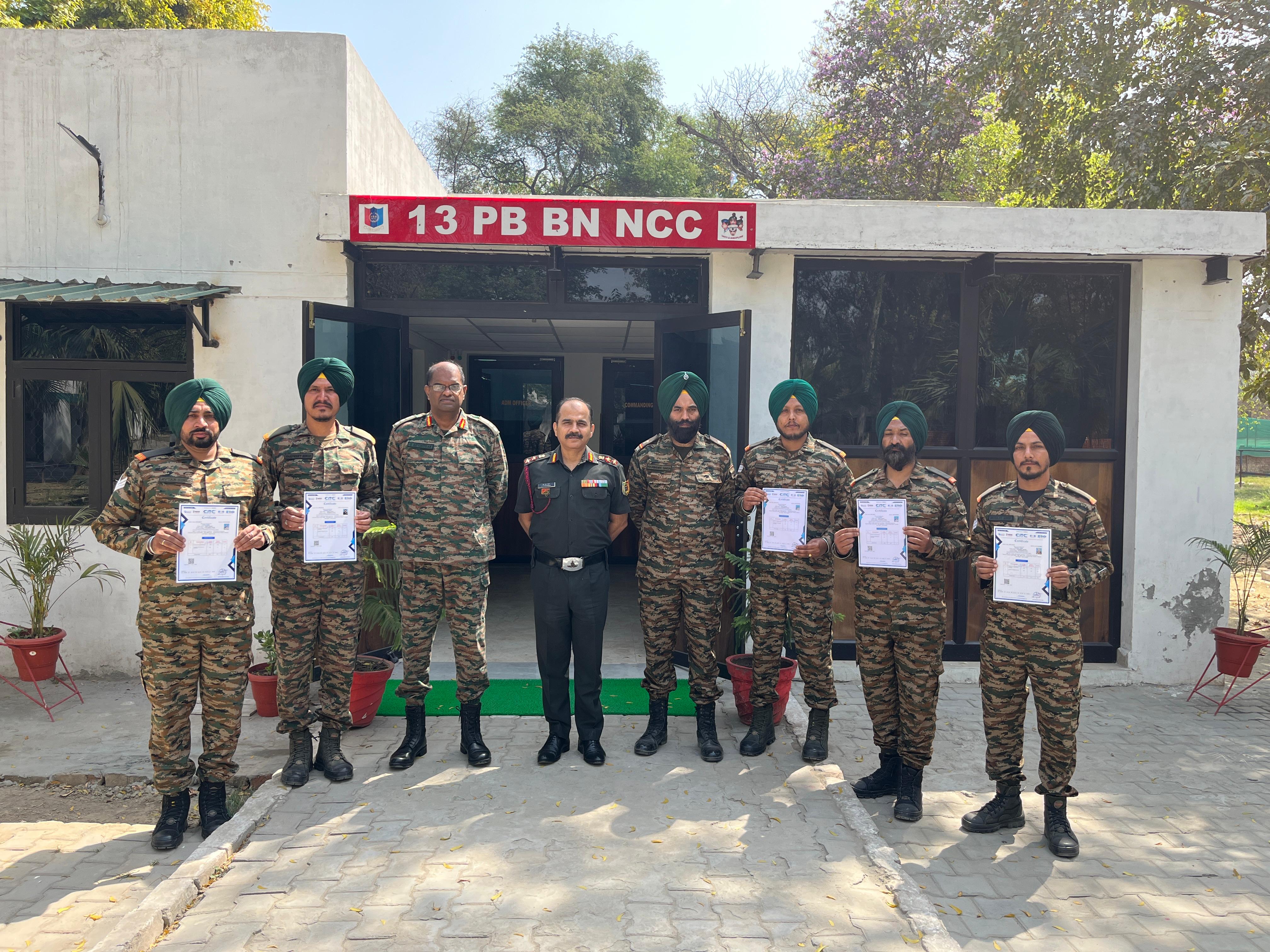
Training at 13 PB Battalion

Training at 13 PB Battalion