Franchise

All Courses

Type a course name or short form (acronym) to find any course quickly.
Cloud Computing

Cloud Computing Course Virtualization (FCC)

Start Date 1 October 2026
Duration 3 Months
Mode Online / Offline
Certification CITC Certified
Batch / Course FCC
Enroll Now

Click here for CITC All Courses FEES

Course Highlights

What you get when you enrol with CITC

Industry-ready Curriculum
Practical Learning
CITC Certificate
Flexible Batches
Placement Support
Career Guidance
1,744+ Franchises
41,756+ Students
445+ Courses
10,439+ Govt. Placements
22,966+ Private Placements
Cloud Computing Course Virtualization

Cloud Computing Course: Virtualization & Cloud Technologies


Introduction

Cloud computing has rapidly become a core part of how businesses and individuals store, access, and process data. This 3-month Cloud Computing course is designed to take you from cloud computing basics to deploying full-stack applications using real cloud environments.

Whether you’re looking to understand what is cloud computing, explore virtualization in cloud computing, or learn about cloud computing architecture, this program has it all.

Course Papers / Subjects

What you will study in this programme

01
Introduction to Cloud Computing
02
Cloud Deployment Models
03
Cloud Service Models
04
Virtualization & Hypervisors
05
Overview of Cloud Providers
06
Creating Free-tier Cloud Accounts
07
Launching & Managing Virtual Machines
08
Hosting a Static Website in the Cloud
09
CLI and SDK Tools Setup
10
Virtual Networks and Security Groups
11
Cloud Storage Concepts
12
Managing Buckets and Lifecycle Rules
13
Introduction to Cloud Databases
14
Deploying and Managing Cloud Databases
15
Load Balancing & Auto Scaling
16
Introduction to Containers & Docker
17
Kubernetes & Container Orchestration
18
Monitoring Cloud Resources
19
Serverless Computing & IAM
20
CI/CD and Full-Stack Cloud Deployment

Syllabus (Module-wise)

Expand each topic for details

Module 1

Course Papers

  • Foundations of Cloud Computing

  • Definition of Cloud Computing
  • Characteristics of Cloud Computing
  • Benefits of Cloud Computing Over Traditional Computing
  • Service Delivery Models Overview in Cloud Computing
  • Real-World Applications of Cloud Computing

  • Public, Private, and Hybrid Cloud – Definitions
  • Pros and cons of each model
  • Use Case-Based Deployment Decisions
  • Comparison with on-premise environments

  • Infrastructure as a Service (IaaS)
  • Platform as a Service (PaaS)
  • Software as a Service (SaaS)
  • Practical examples of each

  • What is virtualization in cloud computing?
  • Hypervisor types: Type 1 and Type 2
  • Virtual machines vs containers
  • Benefits of Virtualization in Cloud Computing

  • Introduction to AWS, Azure, GCP
  • Core services comparison
  • Free tier offerings
  • When to choose which provider

  • Signing up for AWS, Azure, GCP
  • Navigating cloud dashboards
  • Budget alerts and free-tier limits
  • Security best practices during setup

  • Creating EC2 (AWS), Azure VM, and Compute Engine
  • Choosing machine types and images
  • Connecting via SSH or browser

  • Setting up AWS S3 static hosting
  • Hosting on Azure Blob and GCP Cloud Storage
  • Configuring bucket permissions
  • Mapping custom domains

  • Installing AWS CLI, Azure CLI, GCP SDK
  • Authentication and configuration
  • Performing operations via command line
  • Scripting basics with cloud SDKs

  • Creating a Virtual Private Cloud (VPC)
  • Subnets, route tables, and gateways
  • Setting up firewalls and security groups
  • Internet access and NAT configuration
Module 2

Course Papers

  • Advanced Cloud Technologies & Deployment

  • Object vs Block vs File Storage
  • Use cases and provider equivalents
  • Cloud storage pricing models
  • Data redundancy and durability

  • Creating S3 buckets and configuring permissions
  • Enabling versioning and lifecycle policies
  • Storage class transition rules
  • Cross-region replication basics

  • Cloud SQL vs NoSQL overview
  • Differences between RDS and DynamoDB
  • Firebase Realtime Database basics
  • Use cases for structured vs unstructured data

  • Launching RDS MySQL database
  • Creating and querying DynamoDB tables
  • Connecting Firebase to frontend apps
  • Security and backup options

  • Concepts of load distribution and elasticity
  • Configuring AWS ELB, Azure Load Balancer
  • Creating Auto Scaling groups
  • Scaling policies based on metrics

  • What is Docker and why use it
  • Images, containers, Dockerfiles
  • Building and running containers
  • Docker Hub and private registries

  • Introduction to Kubernetes
  • Deploying and managing pods
  • Scaling applications with Kubernetes
  • Service discovery and networking

  • Introduction to CloudWatch and Azure Monitor
  • Creating custom metrics and alarms
  • Viewing logs and setting retention
  • Performance monitoring dashboards

  • Introduction to AWS Lambda / Azure Functions
  • Writing and deploying serverless functions
  • Identity and Access Management (IAM) concepts
  • Creating roles, policies, and access controls

  • Setting up GitHub Actions for CI/CD
  • Backend deployment using serverless functions
  • Frontend + DB integration with IAM permissions
  • Monitoring and cost optimization

What You Will Learn & Career Scope

Details from the course content

Why Choose This Course?

If you're seeking one of the best cloud computing courses that provides hands-on learning, real-world projects, and a solid foundation in both theory and practice, this course is for you. It doesn’t just cover the cloud computing basics—you'll also dive deep into cloud technologies, cloud security, platform as a service in cloud computing, and more.

By working with industry-leading platforms like AWS, Azure, and Google Cloud, you’ll experience cloud computing virtualization, learn about cloud deployment models, and build practical skills in managing resources, containers, networks, and serverless computing. This is not just another clouding in computer theory class—it's a practical learning journey.


What Will You Learn?

Throughout the course, you will:

  • Understand the evolution of cloud computing and why it matters today
  • Learn the characteristics of cloud computing and its different models
  • Get hands-on with virtualization in cloud computing using real hypervisors and virtual machines
  • Explore different cloud computing architectures used across industries
  • Launch and manage services on AWS, Azure, and GCP through free-tier accounts
  • Set up and deploy full-stack apps using cloud-native tools and techniques
  • Gain skills in containers, Docker, serverless, networking, security, monitoring, and IAM
  • Build and deploy a final project covering CI/CD, databases, IAM, and cost control

This cloud computing course ensures you're ready for interviews with confidence—thanks to real-time examples, use cases, and frequently asked cloud computing interview questions shared during sessions.


Opportunities After This Course

After completing this course, you'll be prepared for roles such as:

  • Cloud Engineer
  • DevOps Associate
  • Cloud Administrator
  • AWS/GCP/Azure Support Associate
  • Cloud Developer (Entry to Mid-Level)

You’ll also be equipped for certifications like AWS Cloud Practitioner and Microsoft Azure Fundamentals. Whether you aim to work in enterprise tech, startups, or government organizations, your understanding of what is cloud technology and its applications will give you a competitive edge.

You’ll also have an understanding of advantages and disadvantages of cloud computing, making you capable of choosing the right tools and architecture for different business needs.


Who Can Enroll?

This program is ideal for:

  • Beginners wanting to understand cloud computing basics
  • Students aiming to break into cloud or DevOps roles
  • IT professionals looking to shift to cloud-based roles
  • Developers or network engineers wanting to expand into cloud technologies
  • Enthusiasts exploring IoT cloud computing and serverless apps


No prior cloud experience is required—basic knowledge of computers and the internet is enough to start.

Enroll Now

Ready to start your journey with one of the most practical and best cloud computing courses available? Whether you're aiming for a cloud computing AWS course, looking to master cloud computing architecture, or want to explore how virtualization in cloud computing works hands-on, this program has you covered.

Enroll today and get ready to build, manage, and deploy in the cloud with confidence!

Frequently Asked Questions

Common questions about this course

A Cloud Computing course helps learners understand cloud technologies, services, storage, computing resources, and how cloud platforms are used in modern IT environments.

The syllabus generally covers cloud fundamentals, cloud services, virtualization, cloud storage, networking, security, and practical cloud concepts.

The course is suitable for students, IT learners, beginners, and professionals who want to develop foundational knowledge of cloud technologies.

Basic computer knowledge is helpful. Students with an interest in IT and cloud technologies can consider the course, subject to CITC's current eligibility requirements.

Yes. Beginners can learn the fundamental concepts of cloud computing through structured and practical training.

Learners develop knowledge of cloud infrastructure, storage, networking, virtualization, security, and cloud-based services.

The course duration depends on the current programme and batch structure. Contact CITC Chandigarh for the latest course duration and schedule.

Eligible learners who successfully complete the programme can receive a CITC course certificate, subject to the institute's certification requirements.

Cloud Computing skills can support further learning and career opportunities in areas such as cloud support, IT infrastructure, networking, and cloud administration.

The course focuses on practical learning along with theoretical concepts to help learners understand how cloud technologies are used in real-world IT environments.

The course fee may vary according to the current programme and batch. Contact CITC Chandigarh for the latest fee information.

You can contact CITC Chandigarh to check the latest course details, eligibility, fees, batch schedule, and admission process.

Real Stories. Real CITC.

Stories That Inspire Trust

Training at 25 PB Battalion

Training at 25 PB Battalion

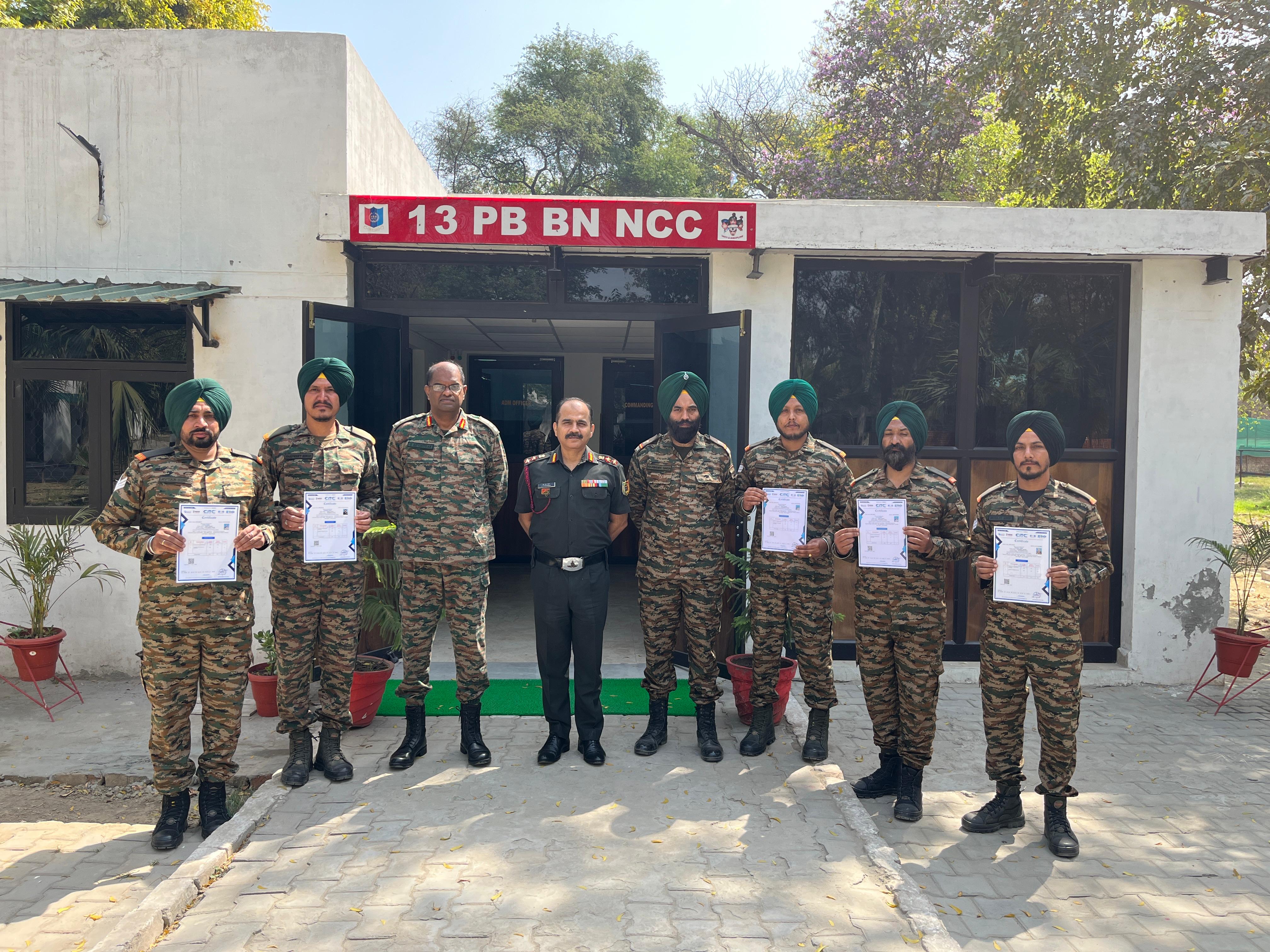
Training at 13 PB Battalion

Training at 13 PB Battalion